Winter Packs

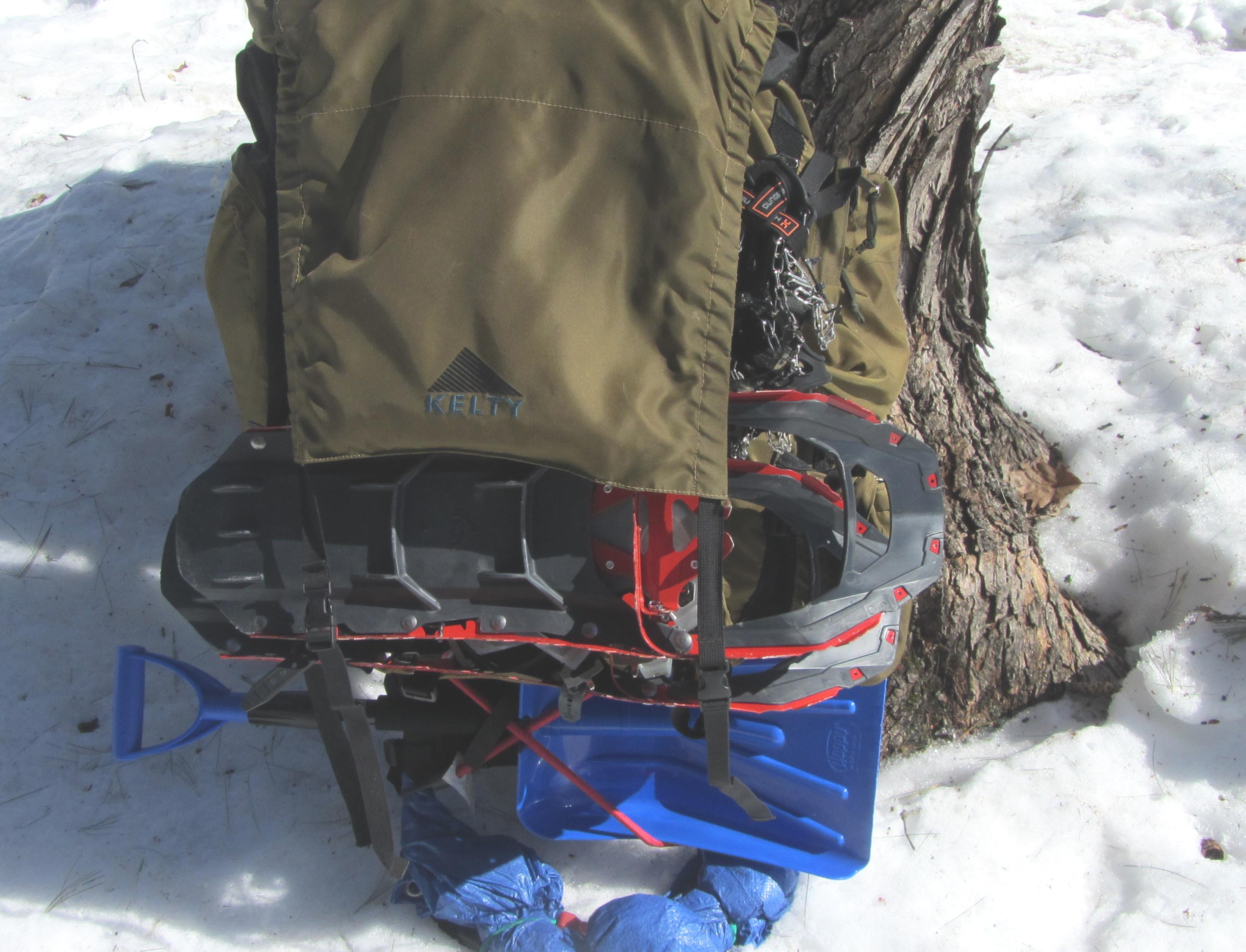
IMG_4120aWinter packs are very different from the packs we carry the rest of the year. Mine definitely are at least. It can be the same physical backpack, but the things that need to be carried are so different that it really changes the whole concept of how the pack is used.

The most obvious difference is all the extra gear that needs to be carried outside the pack; shovel, snowshoes, spikes, skis, ice axes… Most of these are things you need easy access to at times you need to use them, but they need to be secured in a way they won’t be lost in the snow. Sharp edges mean you have to be extra careful that they don’t cut themselves free of whatever is holding them on, other gear or the pack itself. Even with all that going on you still want to have access to things inside the pack too. It really can become a puzzle to figure it all out, but putting some thought into it ahead of time certainly pays off when you’re wading through deep powder and won’t find a dropped item til spring.

My pack changes a lot on the inside as well for winter. Most of the year, in terms of cubic inches, I’m carrying more food than anything else. In winter that changes as insulation takes up so much more space. Normally I bottom carry my sleep system, keeping food and sleep clothes in the main compartment and most everything else in side pockets. The winter pack flips that around with the top quilt needing about twice as much space as the Ventra, extra clothes and of course puffy outer insulation for camp. These items take over the main compartment with additional insulation such as hats and multiple types of gloves invading the side pockets. Food, stove, fuel and insulated mug get relegated to the bottom pouch, but since so far the trips are all really short that hasn’t been an issue.

What has been an issue I’ve found is odd moments of confusion. Normally I instinctively know where every item in my pack is without hesitation. Everything always goes where it belongs until used and once used returns immediately to that same place leaving no doubt where any item is. Then, for the short cold weather months everything is some place else heh. Instead of instantly being able to reach out and grab whatever I need I have to wait til my first instinct is overridden by my second.

It has been a fun winter of playing in the snow, but I’m glad to see it go for more reasons than getting my regular pack in order again. Planning is off to a slow start this year, but the rumblings have begun. I can feel the trails pulling at me and I know I will answer. Family trips with the girls, the annual week with the guys from Texas is almost set and an old friend from California is threatening to come back for another adventure. Hopefully I’ll find some time for solo trips or I may have to find a new trail name. Hmmm, maybe Vermont?

Whether you know where you’re headed or just feeling the pull of the trail now might be a good time to think about how you pack your packs. A little thought to organization can pay off in any season on the path less traveled by
Easier Read Than Done

“…bear west around the forbidding south wall of the summit cone, climb the exposed west face and arrive at the summit…” -GMC Long Trail Guide

Since acquiring the Long Trail map and guide books from the Green Mountain Club I’ve been taking a relaxed tour of the the trail by reading through the descriptions with the map by my side.  Rather than race though the book as fast as possible I’ve limited myself to small sections of reading at a time.  Sort of like how one hikes a long trail, day by day rather than all in one go.

The level of detail in the guide is amazing with small terrain features described in terms that must be Vermontish because they seem unfamiliar to me though they seem clear in context.  Despite taking the time to mention tiny details there are other areas that seem to have nothing worth mentioning based on what made it to the page.  I’m hopeful the details will get me through the parts of the trail that are hard to follow and the sections that don’t warrant detailed mention are the parts where the trail is clear.  Always good to have hope on an adventure like this but a good waterproof map, a compass and the knowledge to use them are a good idea too.

Having studied the trail a bit over the last few years seeing it from this new perspective is interesting.   I’ve read as many trail journals as I could find and have looked at various maps.  Online topo maps can give a detailed view of a very small area but only so far as elevation lines can tell a story.  Trip reports give personal accounts of parts of the trail that were special to that person.  The guide seems to combine technical and human perspectives by giving terrain descriptions in human terms rather than just lines.  I have a feeling these descriptions will be key to staying on trail at times especially in the wilderness areas where it is less cleared and marked.

From trip reports certain pointy bits of the trail stick out as especially challenging.  In the context of an entire trail journal you can tell when a writer is talking about the times that thrilled or scared them a bit more than usual.  How we face those challenges is often what drives us to climb these mountains.  So when the guide book comes to these spots it seems oddly understated.   It uses human terms to describe the trail, but without the human emotion one expects after reading trip reports.

The quote at the top of this post is one of those that caught my eye.  The words are so simple and direct, “…bear west…climb…and arrive at the summit”.  My eyes traveled over those words in the book and then my mind said “Wait!  That sounds like it might be easier read than done.”  It made me think about how many other parts of the trail the book might be describing in simpler terms than reality might bear out.

We can research and plan, but what really matters is what happens when we get there.  A guide book is certainly valuable, but it is only a tool for us to use.  More information helps us make wise choices, but a book printed three years ago can’t decide if the trail ahead is safe today.

I still have about a hundred miles of trail to read through in the guide.  Following the trail northbound some of the roughest terrain remains.  Of course by this time my pack will be twenty pounds or more lighter so I’m not too afraid of those remaining peaks.  I will of course be careful not to let the guide lull me into a sense of security with its minimalist descriptions.  I’ve seen enough pictures and videos to know that no matter what the book says this part of the trail has some treachery to it.  I guess I’ll just have to go slow and keep my wits about me in hopes of not falling off the path less traveled by

IMG_2017Not Vermont

Be Careful What You Ask For

You just might get it.  Those moments when things come together are interesting.   When we cross over a line and something we’ve dreamed of doing becomes something we actually are doing.  In crossing that line we’re moving towards getting what we wanted, but now we are faced with the task of actually doing.

The other day I accidentally got my wife’s blessing to do the Long Trail in Vermont this Fall.  I say accidentally because I wasn’t even really thinking about going until we are able to do it together years from now.  Then it came up in conversation and she told me to go before I even really asked.  If I didn’t know it was love I’d think she was trying to get me out of the house, but offering to solo parent for a month while I’m out living my dreams is definitely love.

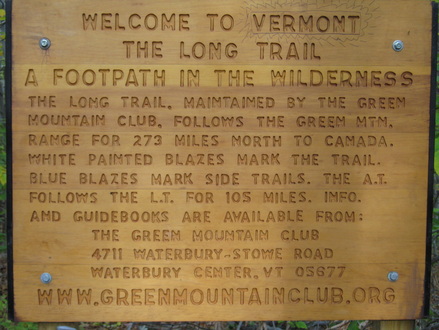
The first time I heard of the Long Trail I began to dream of walking it some day.  I didn’t think I ever actually would as I’m not really a thru hiker, but it sounded like my sort of adventure so a nice dream.  Officially 273 miles stretching from the Massachusetts border on the south to the Canadian border on the north the trail goes the length of Vermont.  Following the Green Mountains it is a long series of peaks and valleys getting peakier as you head north.

The AT joins the LT for the first hundred miles in southern Vermont.  This section sees much more traffic and once the AT heads off to NH and ME on its way to Katahdin the Long Trail continues on more lightly traveled.  As the trail heads towards Canada it becomes progressively more challenging.  Some folks like to do it in the other direction to get the hardest part out of the way first while others work their way up to those peaks training their legs as they go.

Along with crossing all of those mountains and valleys the trail passes near many small Vermont towns as well as some wonderful B&Bs and inns.  Most people will go into town every few days for resupply and many folks plan a day of resting and feasting at one or more of the inns.  My plan is somewhat different as I’d like to save those treats for a future trip on this trail with Mrs Stranger.   Traveling together seems to be the time to enjoy those niceties while this solo trip is better suited to something more challenging.

My plan is to do the entire trail end to end without resupply and without leaving the trail.  Any zero/low mile days, if I decide to take them, will be on a mountain rather than at an inn.  In fact I’m planning on avoiding using the shelters as much as possible in favor of setting up camp alone off the trail.   Despite the fact that this trail passes close to civilization often and the shelters can be social centers my intent is to make this a true escape from all of that as much is possible.

Now that this plan is in motion there are many things to consider.  How to carry enough food and fuel for 20 days or more?  How many cookies to bring?  Will I be tempted by inviting inns close enough to the trail that I can hear the clink of pint glasses?  Will I give in to that temptation?  Finding out the answers to all of these questions as well as many more is what this trip is all about.

To me getting out there has always been about questions and answers I guess.  What am I capable of in terms of body and spirit?  What is the view like from the top of that mountain?  Will it ever stop raining?  We have to be careful about the questions we ask ourselves too I guess.  I am anticipating more than a few nights alone in my tent filled with answers I can only hope I’m prepared for.  I guess that pretty much sums up my life though, hoping I’m prepared for the answers I find on the path less traveled by

LTSign